Throwing a cast net looks harder than it is. The goal is not to make a perfect throw every time. The goal is to load the net consistently, make a smooth turn, and let the net open naturally.
Why This Method Works
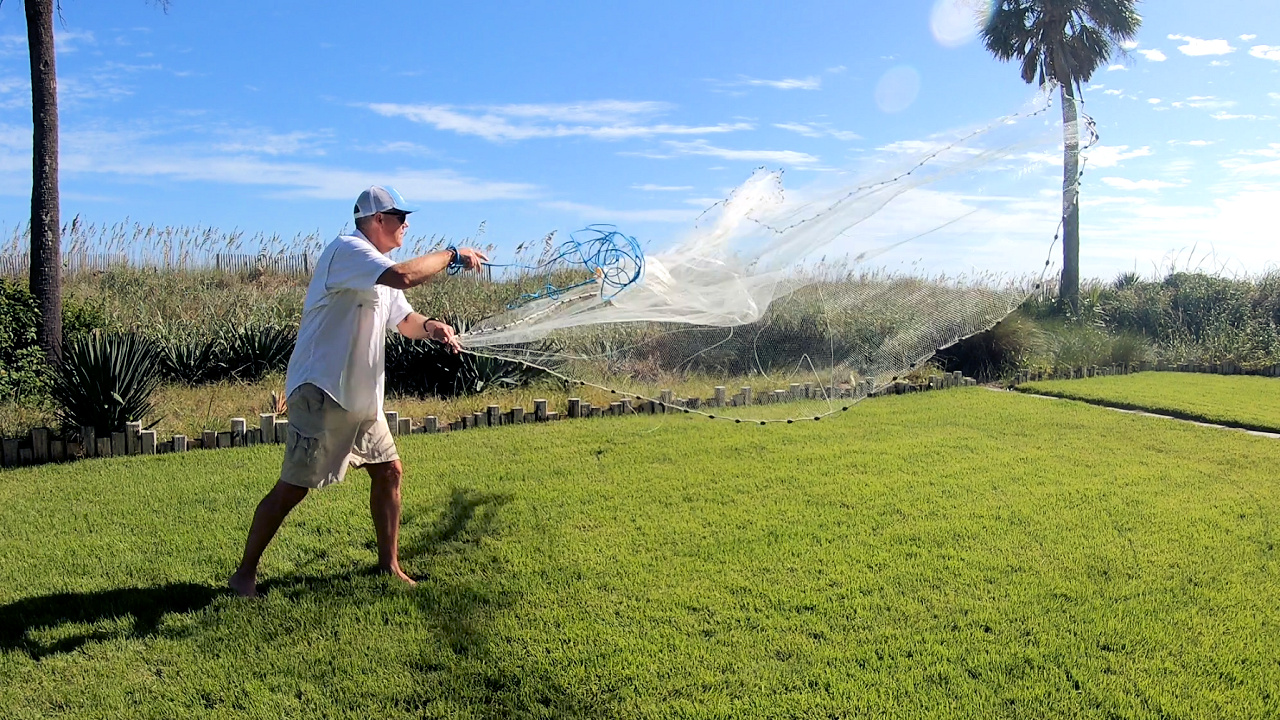
A good cast net throw is mostly about setup. If the net is loaded the same way each time, the throw becomes repeatable.
The turn matters more than arm strength. A smooth body rotation helps the net spread without forcing it.
Step 1: Clear and Coil the Net
Start by making sure the lead line is clear and the net is not twisted. Coil the handline neatly so it can feed out without catching.
Most bad throws start before the cast. If the net is tangled in your hands, it will be tangled in the air.
Step 2: Load the Net Consistently
Hold the horn and gather the net the same way every time. The exact grip can vary, but consistency matters.
Separate the net enough that it can open naturally when released.
Step 3: Turn Smoothly and Release
Use your body to turn through the throw. Do not try to throw the net with your arms only.
Release smoothly and let the net open. A forced throw often collapses or twists before it hits the water.
Common Mistakes
Trying to Throw Too Hard
A cast net opens better with rhythm than brute force. Throwing harder often makes the net collapse or twist.
Skipping the Setup
If the lead line or mesh is tangled before the throw, the net usually will not open cleanly.
Practicing Only on the Water
Grass practice helps you build muscle memory without fighting current, wind, waves, or boat movement.
Frequently Asked Questions
What size cast net is easiest to learn with?
For many anglers, a 7 or 8 foot cast net is a good balance between coverage and manageability.
Does the net have to open perfectly?
No. A mostly open net can still catch bait. Consistency matters more than perfection.
Should I practice on land first?
Yes. Practicing on grass is one of the fastest ways to learn without constantly untangling the net in the water.